Singaporeans demanded change, but they voted for the status quo — my take on the 2025 Singaporean general elections

Updated: Jun 22, 2025
CONTEXT
Singapore has been governed by the People's Action Party (PAP), a centre-right and conservative political party rooted in economic pragmatism and social conservatism, since 1959. Consequently, it has been described as a de facto one-party state. Recently, Singapore held its general elections, which occur every five years. The PAP won 87 out of 97 seats in Parliament and 65.57% of the popular vote, making this their 16th consecutive term in government.
Now, it didn't come as a surprise to many. However, one thing I noticed as someone chronically online is that a large majority of people did not want PAP to be in power. Of course, this is anecdotal and filtered through the lens of social media platforms dominated by younger, often more progressive users.
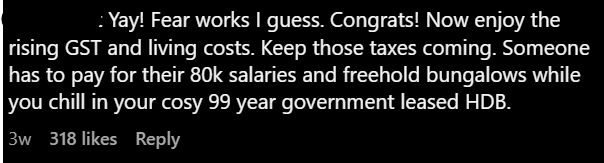

Now, this begs the question: if Singaporeans advocated for change so much this year, why has PAP still won? Based on the recent 2024 demographics, the percentage of Gen Z and Millennials is greater than that of Gen X and Baby Boomers, so this means several members of the former group of generations voted for the incumbents/didn't vote. Why?
"Why is there a disconnect between public sentiment and election results?"
Limited opposition space
Already, several reasons come to my mind. The biggest reason is limited opposition space: opposition parties, such as the Workers' Party (WP) or the National Solidarity Party (NSP), face little media exposure and budget constraints compared to the PAP. This is very analogous to a monopoly (PAP), where it is difficult for new firms (opposition parties) to enter an industry due to limited access to raw materials and little economies of scale. As a result, these firms just do not enter the industry out of fear and even when they do, they fail almost immediately.
The PAP has not disclosed its total campaign spending for the 2025 GE. But, in the 2020 Singapore General Elections, the People's Action Party (PAP) spent approximately S$6.97 million, accounting for about 76% of the total election expenditure by all candidates. That's monopoly power right there. In the 2025 GE, the National Solidarity Party (NSP), and Singapore United Party (SUP) faced financial constraints, with reported campaign expenditures of S$135,000 and S$67,500, respectively.
Obviously, money matters. Visibility matters. More funding means greater outreach, more rallies, better online presence, and superior logistical support. And in Singapore, where mainstream media coverage heavily favours the ruling party, this matters even more.
Strong pragmatic culture
Singapore might be famous for its incredibly modern landscape or its strict laws, but something far more subtle yet equally defining is its heavy pragmatic culture. Singapore’s approach to foreign policy is described as ‘pragmatic’, as is its attitude towards the death sentence, socioeconomic inequality, public housing, economic development, LGBT issues, and even casino building!
Many Singaporeans vote not based on ideological alignment or emotional appeal, but on who can get the job done. And to be fair, the People's Action Party (PAP) has historically delivered on that front. Under Prime Minister Lee Kuan Yew, Singapore transitioned from a struggling port city to a thriving first-world nation. Under Prime Minister Lee Hsien Loong, the government handled the COVID-19 pandemic with relative efficiency, maintained economic stability, and continued investing in innovation and infrastructure.

In other words, pragmatism reinforces the status quo. Even when younger voters grumble about inequality or lack of representation, many still tick the PAP box because they trust the party to "keep Singapore going."
WHERE DO WE GO FROM HERE?
It's clear that Singapore's political landscape is shaped vehemently by culture and structure, rather than political preference. The opposition simply just lacks the financial muscle required to overthrow the PAP and many voters remain risk-averse to what has already been proven a steady formula.
Can reform still take place? Honestly, unlikely.
Singaporeans are generally pretty conservative. As mentioned earlier, if there already is a well-worn path for governance, then why would Singaporeans bother voting for the opposition parties whose policies are tangibly different from that of the PAP's?
Even with the digital age ushering in greater access to information and global political discourse, the foundational values that shape Singapore’s electorate — pragmatism, economic stability, and social cohesion — continue to hold sway. Young voters may scroll through more political commentary and engage in more spirited online debate, but when it comes to the ballot box, many still echo their parents' caution: don’t rock the boat.
Moreover, the lack of a compelling and unified opposition narrative reinforces the status quo. Fragmented messaging, limited grassroots reach, and a perceived lack of readiness to govern make it difficult for alternative parties to gain traction. So long as the PAP continues to deliver stability and material progress, voters are more likely to choose familiarity over idealism. And if you ask me, with the current uncertainty surrounding global trade and heightened geopolitical tensions, I genuinely don't understand why anyone would look down upon political orthodoxy, but this is a story for another day.
Now, what do you think? Feel free to comment on what you think of this article or reach out to me via email (provided in the bio!)


Comments